
LangGraph · Lesson 110 of 120
Designing Graphs
Small nodes.
A good graph reads like a flowchart a colleague could understand. Each node does one job, and has a name that says what it does. Branches are clear, and every loop has an exit.

- Reads like a flowchart
- One job per node
- Clear branches, safe loops
Graph rules
Give each node one job, and a verb for a name, like triage, or check stock. Keep model calls and plain code in separate nodes, so each can be tested. Make every loop's exit obvious. And draw the graph often, to check its shape.
| key | value |
|---|---|
| One job | per node |
| Names | verbs |
| Separate | model and code |
| Draw it | check the shape |
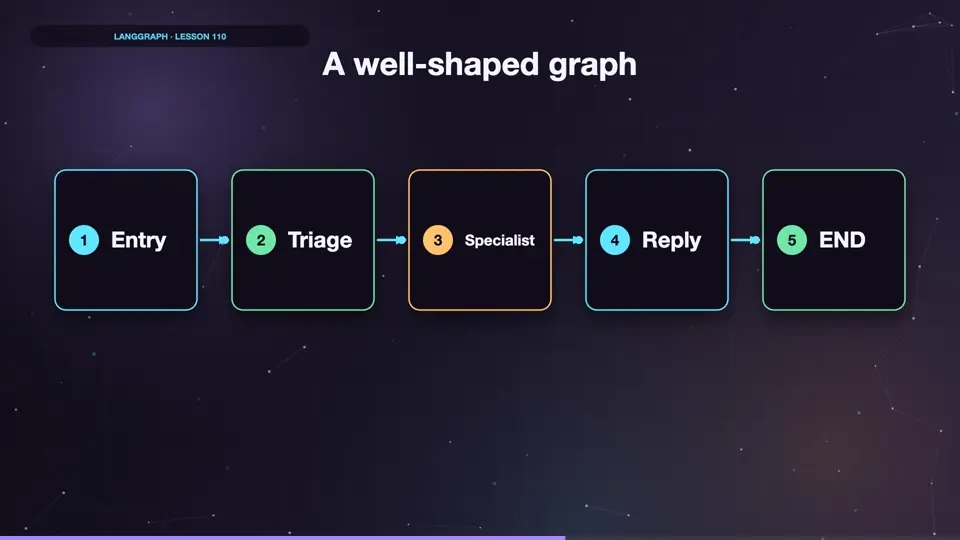
A well-shaped graph
Our support desk is a good example. A clear entry. One decision point. Specialists that each own an area. And a single path to the end for each request.
- Entry
- Triage
- Specialist
- Reply
- END
Summary
Good graphs have small, well named nodes, clear branches, and loops with obvious exits. Next, when you shouldn't use a graph at all.
Key takeaways- One job per node
- Verb names
- Draw it often
Next up: When Not to Use a Graph — keep it simple