
Working with Stakeholders
The skill nobody teaches.
A manager asks for a report on sales by region. You spend a week on it, and it's beautiful. They glance at it, and say thanks, and nothing happens. What did they really want? It turns out they were deciding whether to open a new cafe. You answered the question that they asked, and not the one that they had.
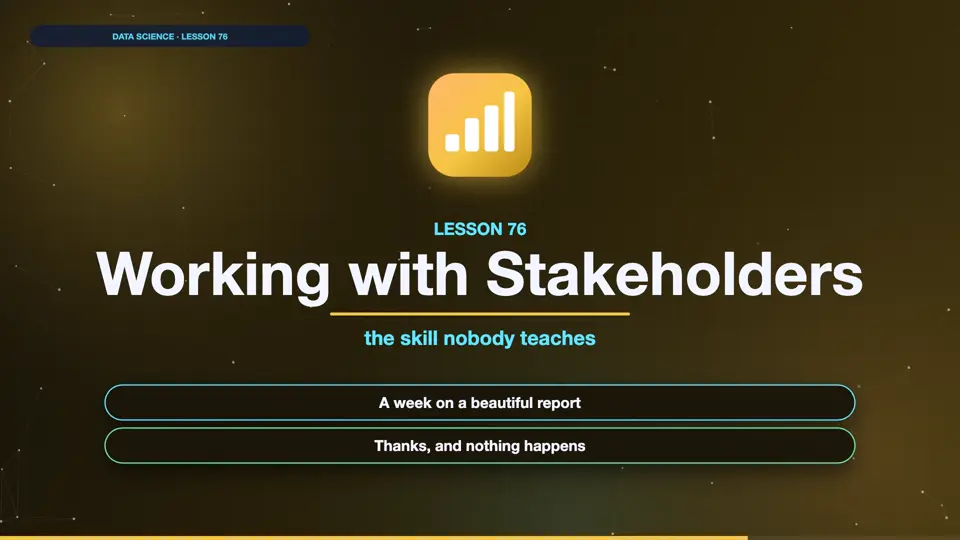
- A week on a beautiful report
- Thanks, and nothing happens
- They had a different question
Five questions to ask first
Before you open any data, ask five questions. What decision will this inform? What would you do differently, depending on the answer? When do you need it? How precise does it need to be? And who else cares? Those few minutes can save you a week. If they can't name a decision, then that's your answer.
Share early, share often
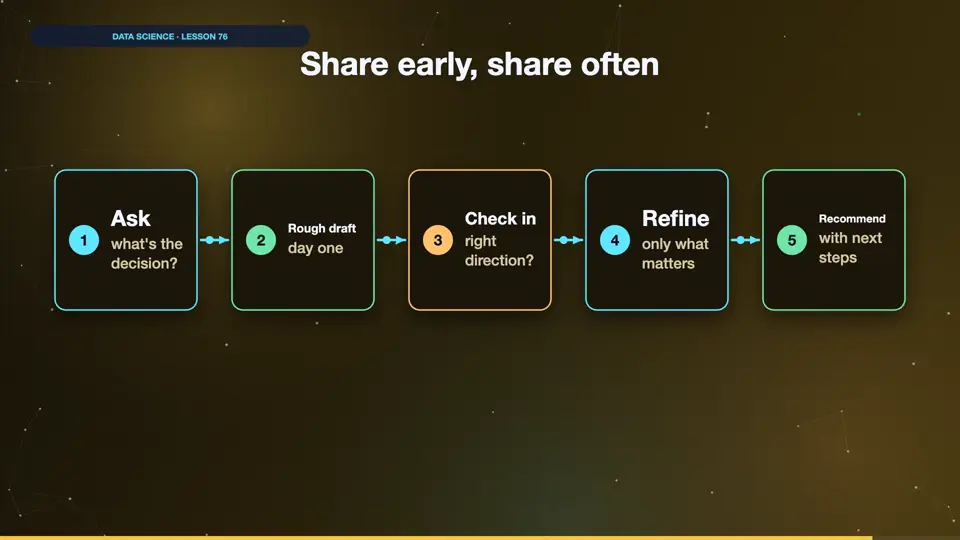
Don't vanish for two weeks, and reappear with a final answer. Share a rough version after a day. Ask, is this what you meant? Is this the right direction? You'll catch misunderstandings early, and people will feel involved, so they're far more likely to act on the result.
- Askwhat's the decision?
- Rough draftday one
- Check inright direction?
- Refineonly what matters
- Recommendwith next steps
When the data says no
Sooner or later, your results will disagree with what a senior person wants to hear. Stay calm. Show the data, and how you checked it. Separate facts from opinions. Offer other options, rather than only saying no. And never bend the numbers. Your reputation for honesty is the most valuable thing that you own as an analyst.
Summary
Ask what decision it's for, share early, and stay honest. Next, a tour of more powerful ways to show your data.
Key takeaways- Start with the decision
- Share rough work early
- Never bend the numbers