
Storytelling with Data
From findings to action.
The biggest difference between an average analyst and a great one isn't technical. It's that a great one gets things to happen. Numbers alone rarely change anyone's mind. A clear story does.
- Great analysts make things happen
- Numbers alone don't persuade
- Stories do
The pyramid
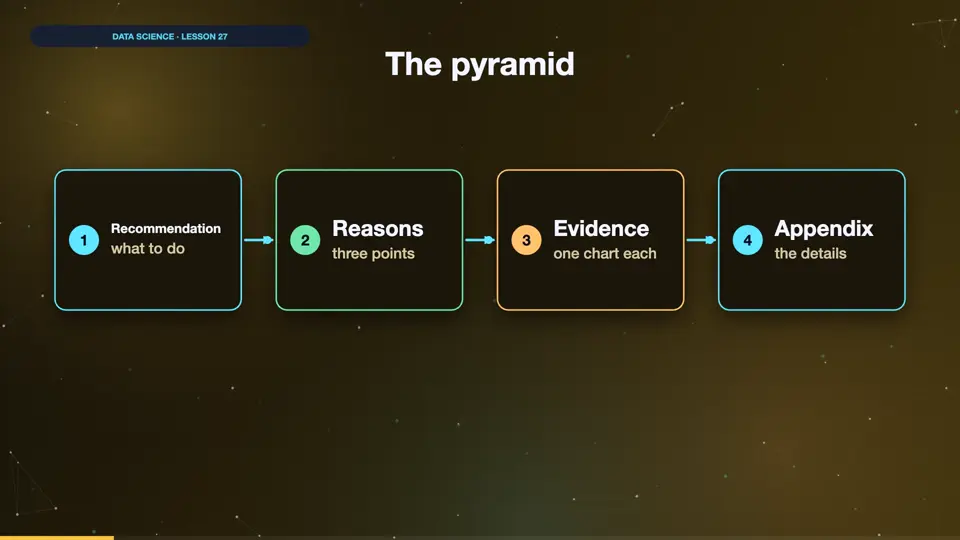
Executives don't want your journey. They want the answer. So flip your usual order. Start with the recommendation. Then give three reasons, then the evidence. Keep the details in an appendix, for anyone who asks. If they only read one line, they should get the point.
- Recommendationwhat to do
- Reasonsthree points
- Evidenceone chart each
- Appendixthe details
A one page brief
Here's a real example. Recommendation, move forty thousand dollars of marketing from the bottom cafes to loyalty for top tier customers. Why? The top quarter of customers bring in half of the value. Their lifetime value is highest. And card holders leave less in every cohort. Next step, run a four week pilot in two cities. That's clear, specific, and easy to approve.
Talking to non-experts
Replace jargon with plain words. Say, we're fairly sure, in place of, p is less than point zero five. Round your numbers. Forty percent is better than thirty nine point seven. Admit what you don't know, because it builds trust. And always end with the decision that you need from them.
Summary
Lead with the answer, keep it short, and ask for a decision. Your analysis can now change the business. Next, how to give people a tool, so they don't have to keep asking you.
Key takeaways- Answer first
- Three reasons
- End with a decision